Wednesday, March 14, 2012

Dungarvan Square Market day
Ring College 1960.Left to Right; Mike Terry,Ring,Seamus O'Cleary,Waterford,Frank Isdell, Old Parish. Muris Buldlear and unknown.
Micheál Ó' Donaill at Mayor Daly monument


Ring play. left to Right; Garda Sullivan, Seán Regan, Unknown & Danny Murphy who was a postman in Ring.
Front Peg Regan,Mikey Brien, Deirdre Haugh

Laying electric cables at Ring College, 28-8-75.Pats Donnell standing and Unknown Moroney driving J.C.B.


Mr. Michael Terry

Mr L. Ó' Cadhla at Ring College


Tomás de Bhial

Uknow Group


I love this picture,Mikey Costin and Bridget Galvin, the youngester is Mossie Galvin, note the old shopping bag that Mikey is carrying, his bike thrown against the wall and the bicycle clips on his pant.

Saturday, February 11, 2012


Youghal Historian Mike Hackett
Sailors and Seamen of Youghal who lost their lives to the water. 
My thanks to Mike Hackett  , Youghal's great historian for compiling this. Some of the sailing vessels which I have attached are un-named at present.


Captain Fleming of Youghal died on the schooner ‘Hertford’ when it
 shipwrecked on the Wexford coast in 1882. It was owned by local merchants
Flemings and the captain was one of the family.

 James Butler of Windmill Hill also died on the schooner ‘Hertford’. James
was actually a baker by trade and this was his first voyage. Patrick
 McCarthy and Seaman Bennett, both of Youghal, were also lost in that
 incident.

 Walter William Burke of Hanover Street contracted Yellow Fever on the
 Tall-Ship ‘Melanope’ in 1894. He died at sea and the vessel brought the body
 into Rio-De-Janeiro, Brazil, where he is buried.

 Miko Loughlin of the Mall died on the schooner William S. Green, shipwrecked
 on the Devon Coast in 1904. Danny Coakley of North Main Street and Tommy
 Walsh of Mary Street also died then on the William S. Green.
The William S.Green


 Jack Smyth of Flemimgs Court, Tallow Street, died on the ‘Annette’ when she
 went onto the rocks below Youghal Lighthouse in 1905. Captain Kirby of
 Dungarvan died on the same occasion.

 Patrick McCarthy of Mouse Street caught a disease on a brigantine, died, and
 was buried in Archangel in Russia. He was grandfather of the late Noel
 Donoghue of Cross Lane.
 Paddy O’Brien of Ballyvergan was lost overboard from the destroyer ‘Cossack’
at Ayr in Scotland, in 1919. He slipped on a steep gangway and hit his head
 on the quay-wall.

Captain Patrick O’Brien of Strand Street, died of blood poisoning on the
‘B.I.’ at Runcorn, Merseyside in 1914, at the age of 32.

Martin Bland of Church Street died on ship in 1920 and was buried in Aruba
 in the Dutch Carribean. He was father of the late George Bland of O’Rahilly
 Street.

James Duggan of Church Lane, in an attempt to rescue a fellow sailor,

 was drowned while the schooner ‘Elizabeth Drew’ was berthed at New Ross in
 1933.

 William Perrott of Wales was drowned in 1933 while attempting to swim ashore
 from the ketch ‘Daisy’ while it was moored in Upper Youghal Harbour. There
 is a memorial to William chiselled into the rock near Youghal Lighthouse and
he is buried in Templemichael graveyard.

 Tommy Smyth of the Alms Houses was lost overboard at Rouen in france in
 1933.

William John Coleman of Quay Lane died aboard ship in 1936 on the way to
 Australia. He was buried at sea.


 Captain Michael Duggan of Church Street was lost on the ‘Nellie Fleming’
 which foundered without trace between the Bristol Channel and Youghal in
 February 1936. Also lost on the same vessel were: Batty Glavin, on the way
 home to his daughter’s wedding; Eddie Sullivan of Raheen Road on his first
 voyage as cabin boy; Dan Kenneally of The Mall, father of a large family;
and Declan Doyle of Penders Lane, eighteen years of age.

 William Ring of 135 North Main Street was lost overboard in Cardiff Docks in
1937. Having managed to hold onto a rope all night, he died the following
 morning from exposure.


John Doyle from Gallagher Terrace fell overboard while on a voyage to
 Australia in 1938. He was a brother to Declan Doyle, lost on the ‘Nellie
Fleming’ two years earlier.

 Connie Troy of Windmill Hill was electrocuted while repairing his fishing
boat at Cobh in 1946.

 Michael O’Regan of South Cross Road was serving in the Irish Naval Service
 on the ‘L.E. Cliona’ in 1952. He took ill on board, was brought to hospital
 but sadly died at just eighteen.

 Patrick Sullivan of South Cross Road, was lost overboard at
 Newcastle-upon-Tyne in 1962.


 Teddy Murphy of Kent Street, was struck down with appendicitis at sea in
 1962 on the ship ‘Ordinance’. He died in Dunkirk hospital.

 Tom Paul Ring of Sarsfield Terrace and Joey Gaule of Mall Lane died while
 asleep in their bunks on the ‘Irish Sycamore’ as it lay docked in New
 Orleans in 1965. Smoke inhalation was the cause of death when a fire started
in an empty cabin next door.

 Gerry Griffin of Brown Street, was lost overboard from the ‘Mossville’ while
 berthed at Cork in 1967. It was said that a plank gangway collapsed.

 Noel O’Brien of De Valera Street died when he fell overboard from a dredger
 on the river Thames in 1968.

Joe Higgins of Strand Street fell between vessel and quay at Greenock in
 Scotland in 1970 and was drowned. The ship was the ‘M.V. St. William’.

 Timothy J. Harnedy from Inchiquin, Killeagh was drowned in 1982 while
swimming at Bondi Beach in Australia. Ted was the ship’s radio officer and
was on leave, awaiting a plane home.
 James Jessie Collins of Raheen Road, died on the tanker ‘Rathcoyle’ in 1994.
Asleep in his bunk, while docked at Ellesmere Port near Chester, he died of
a heart attack.

Fishermen who died in River, Harbour and Bay tragedies.
 James Hannigan of Wesley Place, drowned when a salmon yawl overturned in
Youghal Harbour in 1886. Connie Glavin of Greens Quay was also lost in that
 disaster.

Two Flaherty brothers and two Mulcahy brothers of Monatrea, were drowned
 when their salmon boat capsized at Mangans Cove in 1887.

 Four men were drowned near the Metal Bridge in 1892 when their salmon yawl
 turned over. They were Maurice Keogh, Maurice Fleming, William Keating and
 John White -- all were from Ardsallagh. They were using a dipping-lug sail
 at the time with which it was hard to change tack.
The Kathleen & May


John Hogan of Ardsallagh went for a swim in 1916 at the High Rock near
 Fleming’s Ferry, between fishing the tides., and it cost him his life. He
had his passage booked to America and a tailor named Bride in Youghal was
 making a suit of clothes for him.

 Tommy Smith of Primrose Lane, was drowned in Youghal Harbour in 1923 when
his salmon boat captized. With him and also lost were Pats Murray of
 Monatrea and Tom Aher of Porters Lane. Saved that day was Mike Hannigan, who
 was Cox of the local lifeboat for years.

 Bob Foley of Water treet was drowned when another salmon boat turned over in
 1927. Also lost then were Declan Kenure of Windmill Lane and Jim Boland of
Water Street.

Then in 1933, yet another salmon yawl capsized on the river. Drowned that
 day were Johnny Brennan of The Mall and Tommy Truxie Griffin of Mill Road.
 Rescued were Tommy Muta Heaphy and Mike O’Neill.

 Mick O’Brien-Stokes of Sarsfield Terrace died of a heart attack in his boat
 while fishing down the harbour in 1949.

 Paddy Barry of Ceann a Bhotair (Redbarn) received severe head injuries when
 injuries in hospital.

 Declan Hannon of South Main Street was lost overboard from a fishing boat in
 Waterford Harbour in 1972.

 Danny Twohig of Blackwater Heights suffered a heart attack while hauling his
 nets on the river in 1992. He died in the boat.

 Lost at War

 Richard Ahern of Youghal, died when the ‘H.M.S. Goliah’ was sunk in 1915.

 William Patrick Nolan of Brown Street, died in the sinking of ‘H.M.S.
 Defence’ in 1916.


Michael Mulcahy of Ardmore was killed when the ‘H.M.S. Indefatigable’ was
 sunk in 1916.

 Maurice McGrath of the Clock Gate, died on the ‘H.M.S. Davis’ in 1917.

 John Hyde of the Ferrypoint, died when the ‘H.M.S. Cornwall’ went down in
 1918.

When the ‘H.M.S. Laurentic’ hit a minefield off Malin Head near Derry in
 1917, it cost the lives of four Youghal sailors. They were: Patrick Brennan
 and John Buckley, both of The Mall; William Lynch, Buckley’s Lane; and Jacky
 O’Brien, Windmill Lane.

 William Glavin of Windmill Hill was lost when the minesweeper ‘Mignonette’
 was torpedoed off the Cork coast in 1917.

 Tommy Stack of South Cross Road, Miley Long of Water Street and Jack Murphy
 of South Main Street died in 1940 when the aircraft carrier ‘H.M.S.
 Glorious’ was sunk by battle cruisers in the North Sea.

 Brendan Murphy of Market square and William Kirby of The Mall died on the
 cruiser ‘H.M.S. Gallatea’ when it was torpedoed and sunk off Alexandria in
 1941. It sank in ninety seconds.
 Two more Youghal men died when the battleship ‘H.M.S. Barham’ was torpedoed
and sunk off Alexandria in 1941. They were Jerry Connolly of Cork Hill and
 Bobby Webster of Sarsfield Terrace. The two men were stokers down below and
had little chance of escape following the four torpedo hits.

 Tommy Roche of Water Street died when the armed trawler ‘Lincoln City’ was
 sunk in the North Atlantic in 1941. He is buried on the Faroe Islands.

 Jimmy Walsh of Raheen Road lost his life early during the Second World War
when his ship, a merchantman, was sunk by a torpedo. It is said that in his
 house was a picture of a sailor returning home with his bag over his
 shoulder and his family running to greet him. On the night that Jimmy died
 at sea, the picture fell off the wall for no apparent reason -- the cord had
 not broken and the nail was still firmly stuck in the wall.

 Bill Kelly of Market Square was killed when his vessel, the ‘Swiftpool’ was
 bombed while moored on the Thames river.
Maurice Cooney of Kent Street, on another merchantman, was killed by U boat
 action in 1941.
 Tommy Mulcahy of Market Square died on the ‘Kingston Hill’ after it was
 torpedoed in 1941. He was engaged to be married.

 John Ronayne of South Cross Road was in the merchant navy and was lost as a
 result of U boat action early in the war.

 Edward Fowkes of Ashe Street was on the ‘Shakespeare’ during an aircraft
 attack on the ship. He was killed on deck.

 Peter Lynch of Church Street lost his life when ‘S.S. Milos’ was torpedoed
 and sunk in 1942. His parents later lived in the house which had been the
Fever Hospital at Raheen Road.

 Alfie Hartnett of Barrys Lane was on the ‘Irish Pine’ when it was sunk by
 U-608 in the North Atlantic in 1942. The ‘Irish Pine’ was clearly showing
 neutral markings and was lit up to show the Irish connection. It was a bad
 decision on the part of the U boat captain.

Connie Glavin of Cork Hill died when his vessel the ‘S.S. Miriam

 Thomas’ was run over by an American troop ship in the Irish Sea. There was
 no survivor from Connie’s ship after that calamity.

 Eddie Glavin of Cork Hill, Connie’s brother, died when his ship was
torpedoed, just three days out of New Zealand, in 1943.

 Michael Lynch of Kent Street fell ill on board his ship ‘S.S. British
Renown’ in 1944 and died. He is buried on the Isle of Wight.

 Paddy McGrath of Strand Street died when the ‘S.S. Empire Heritage’ was sunk
by a mine in 1944. He had earlier survived two sinkings by torpedo in the
 North Atlantic
 Captain William O’Brien of The Mall was drowned when he fell overboard at
 Greens Quay from the ‘Rob Roy’ in 1900. It seems that he had been asleep in
his bunk for awhile before he awoke to find the ship ranging (beginning to
 tug) at her ropes due to a build-up of sea swell. A storm was imminent!
 William got up to adjust the fenders of the vessel, ensuring that it would
 not damage itself against the quay wall. Tragically, in the process, he fell
 overboard and was drowned.

 Another Captain, William Jones of Friar Street, was lost from the ‘S.S.’
 Athena’ as the vessel navigated the Majellan Straits in Southern Argentina.
 It happened in 1904, ten years before the opening of the Panama Canal. At
 that time, the only way from the Pacific Ocean to the Atlantic for large
 ships was around Cape Horn, or via the nearby Majellan Straits for smaller
 ones.
 When the ‘Hiland Mar’ went onto the rocks at Ardo Head near Ardmore in 1894,
 it cost the lives of two Youghal sailors. They were named as seamen Bennet
 and Fenton and both were from the Windmill Hill area. The ‘Hiland Mar’ was
 carrying steel for an extension to the Youghal Brickworks on that ill-fated
 voyage. The skipper -- Captain Nagle of The Mall -- escaped by climbing the
 cliffs to reach the nearby house of the Terry family.
 In the second half of the last century, two disasters in Ardmore cost the lives of four of their salmon fishermen. On both occasions, the boats
 overturned. Lost to the sea in 1982 were: Liam Lincoln and Tom Morrissey of
 Ardmore.
Then in 1995 cousins Paul Dunne and Edmond Fitzgerald also died in similar
 circumstances when they were drowned while salmon fishing at Ardmore.

 The total number listed here ( and this may not be complete ) is
 ninety-four.

 God grant peace to all their souls.


Sailors and Fishermen of Ardmore and Youghal remembered

A full-of-colour religious ceremony took place at the Youghal Parish Church when the annual Mass was said last Saturday for all the mariners lost to the water.
Uniforms were in abundance with the Irish Naval Service well represented. Also in attendance were the local Coastguard Service and the Royal National Lifeboat crew. The Mass was said by Canon Tom Browne, assisted by Fr. Denis Herlihy, recently retired back from England.
Another attractive and emotional aspect of the ceremony was the sea-shanty songs and music provided by members of the Lifeboat and Navy. Local historian and author Maurice Ahern, whose forefathers were sailors and fishermen, gave the homily and included a few lovely poems. ‘I must go down to the sea again, to the lonely sea and the sky, and all I ask is a tall-ship and a star to steer her by’.
The congregation mainly comprised members of sea-faring families from Ardmore and Youghal who were deeply moved by the prayers and singing. Everywhere could be seen hankies drying the tears from the eyes of adults as they were reminded of their loved ones -- some of whom have no graves but the deep ocean. Canon Browne spoke of the strong heritage of seafaring in the area and how costly it was during storms and world wars. 

The Offeratory gifts brought to the altar included many medals of honour belonging to forefathers of members of the congregation. Also brought up to the altar was a replica of a tall-ship and a painting of the ‘Kathleen-and-May’ schooner.
At the conclusion of a very inspiring, emotional and prayerful hour, that great lifeboat anthem by Phil Coulter ‘Home from the Sea’ was sung by all.
There was hardly a dry eye in the house.
In this year of the centenary of the loss of the Titanic, it is fitting that like Cobh, the port of Youghal should remember and honour its souls lost to the sea.

The Loughlins of the Mall, Youghal, were a typical seafaring family of the nineteenth century when sailing ships ruled the seas.
Tom Loughlin captained the sailing ship
Perfect, a boat that left Youghal every Spring in the mid-eighteen-hundreds to sail to the Americas. Cargo outwards would be dairy produce and on the return voyage, timber like mahogany was imported. Tom had four sons named Tommy, Michael, Jack and Jim. Tommy was sailing with his father (at just nineteen) when he was washed overboard off the Lizard. Captain Tom had to be forcibly restrained from jumping overboard in what would have been a hopeless attempt to save his son.
Another son of Captain Tom, Miko Loughlin of the Mall, died on the schooner William S. Green, shipwrecked on the Devon Coast in 1904.
Move on to 1917, when Jack Loughlin, then himself a captain, was drowned with all his crew on the
S.S. Ballater (Liverpool). It was during the First-World-War, in September 1917, that a submarine attack caused that loss. Jack was then fifty-two years of age.
And so of the original four Loughlin sons, who sailed out with their father, only Jim (also now a captain) remained. He was affectionately known as Jimo and it was his belief that
Davy Jones Locker had taken enough of the Loughlin family. So Jimo retired from seafaring, settled down ashore and lived to a ripe old age.

Saturday, January 28, 2012

Running For fun, by Paud Curran

My thanks to Paud, for this article.And, apoligies for hounding him to contribute to the Blog. Anyone out there who have anything to contribute, please get in touch. Photos, articles etc will be very welcome.
Please note, photos are from private collection and (c)
Eddie

Tom Cheasty
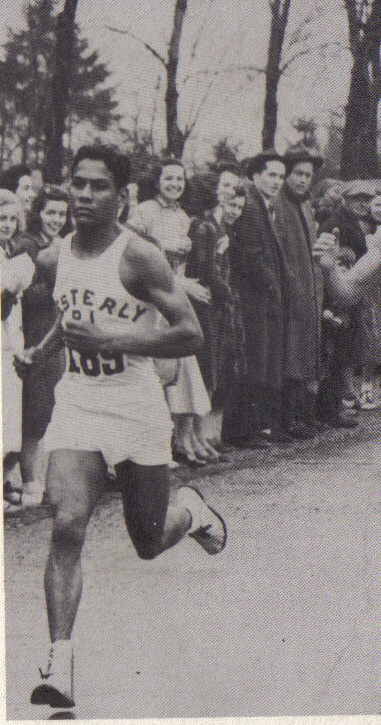
Sometime during the winter of 1961 John Harty encouraged me to travel to Dunhill in his car to participate in the county juvenile (under-16) cross-country championship. I remember that we collected another young lad in Ballinroad (possibly Tony McCarthy?), who as far as I can recall won the juvenile title that day. For my part, I had little or no experience of competitive running and I don't think that I even finished the race.  What does stick in my memory is that the senior title was won by that great Dunhill all-rounder, Mick White, while the junior race victor was Tom Cheasty, who just shaded it over John Harty.
Tom, in his hey-day, was notably broad-shouldered, with a build that certainly did not fit the profile for distance running - but he was, in all probability, using cross-country as part of his physical conditioning for hurling.


Paud at the finish of the Boston City marathon in 1986 with the lads from South Hill limerick

 
In 1962-63 I attended Pallaskenry Agricultural College in Limerick, where one had a chance to sample all kinds of athletic endeavour. While I could hold my own at football (having won a county junior championship with An Rinn that year), insofar as running was concerned it became clear to me that I did not have the natural speed for the shorter races and was probably the wrong build for the serious distance stuff. However, within these limitations I was to derive huge enjoyment from running for fun, mainly on the road, until I was well into my fifties.
Pallaskenry Agricultural College


Rideau Canal 
While I always had an interest in running throughout the sixties football was my main sport at that time. It was only when I lived in Ottawa, Canada between 1976 and 1980 that I really began to devote the time to it. Ottawa has the wonderful Rideau Canal flowing through its centre and, while it turns into a large skating rink in winter, it had a tarred pathway for pedestrians and cyclists along its banks, which went on for many miles. I worked downtown and we lived in a suburb five or six miles away and it was ideal to be able to run home after work (much of the jog taking me along the scenic banks of the Rideau Canal). In addition, Ottawa hosted an international indoor track meet and it was fantastic to see the great Eamonn Coghlan compete in a 5000 metres race on one occasion.

 The city also hosted an annual marathon race, and while I did not participate in this or indeed any other organised race at the time, it was clear that I had a growing interest in doing so.

The other interesting development at that time was the emergence of the highly designed and engineered running shoe. Adidas, I believe, led the way and the era saw a growing linkage between fashion and sportswear, which continues to evolve. It was a long way from the cheap, flat-soled, canvas running footwear that we wore in our youth!
I was friendly with a fellow from Co. Clare called Seán Egan, who was an 
The late, Seán Egan
academic at the
University of Ottawa. We played together on the Ottawa Gaels football team (in 1977, I added a Canadian junior title to my Waterford one!).
 Seán was a super-fit individual who could decide to run a marathon on a whim. In April 2005 the same man tragically lost his life on the slopes of Mount Everest while attempting, at 63 years, to be the oldest Canadian to summit that mighty mountain.

At home in An Rinn great things were happening on the athletic front. The marvelous exploits of St. Nicholas A.C., mentored by Fr. Michael Enright with the assistance of others such as John Harty and Paddy Joe Curran, had become a national story. I was away from it all but my brother, Kevin, and sister, Līse, were very much involved with the club. However, it was the emergence of John Treacy as an iconic figure for club, country and country that made that era a truly golden one.
Paud Curran admires Seán Treacy's Olympic medal 1984 Boston, right is Brendan Rogers
 When I returned from Ottawa and was living in Dublin I found that the Dublin City Marathon had become a hugely popular event and that there was a noticeable presence of runners on the city streets. I eventually trained enough to just about complete the race in 1981, and again (with an improved time) in 1982. I managed to raise some funds for ALONE on both occasions and met its founder – a very committed and modest man called Willie Bermingham. It was also great to participate in the marathon with old friends from An Rinn such as Seamus Drummy and my brother-in-law, Johnny Young.
Paud and John Young In Dublin

In 1983 we moved to Boston, the home of arguably the world's most famous marathon. As a race with a history dating back to 1897 I was nervous of even attempting to enter during our first year in the city. I did, however, train for an autumn marathon called BOSTONFEST, which I managed to complete in under three hours and thirty minutes (a visitor from home, Eamonn Terry, ran a magnificent 2.45 that day). The Boston Marathon proper is always held on Patriots' Day, which falls on the third Monday in April.
Boston City marathon. Left Paud Curran, to the fore, Mayor of Boston, Ray Flynn and to his right, Eddie Burke.1985
The obvious difficulty for anyone living in the Boston area is that the preliminary training for it has to be undertaken in severe winter conditions. My place of work was in Copley Square, which is the finish point for the marathon but which is also just a short distance from the Charles River. Not unlike the Rideau Canal there was a running pathway along both sides of the river which went on for about 20 miles in total distance and which was cleared of snow in winter. With the proper gear to combat the low temperatures this was an ideal training locale  for the April marathon. As one moved to within a month of the race date, in order to have a good chance of completing the 26.22 miles (42.195 km) course in a reasonable time, a week of peak training along the Charles River would involve five consecutive ten mile runs followed by a rest day and a twenty mile run on day seven. A fair commitment indeed for a “fun” runner!
A winter day
I completed four “Bostons” between 1984 and 1987. I managed to obtain an honorary official race number each year without having to achieve a qualifying time which I didn't have a hope of reaching (my fastest time over the four years was 3:31.38). In any event, I now have four coveted medals as souvenirs. Medals apart, I met some interesting people and made some great friends in these years’
The late Pat O'Connell
 Pat O'Connell from Killarney was a regular participant in the marathon  - to raise funds to fight the disease that eventually took his life ; Fr. Joe Young and a group of young lads from the troubled Southill area of Limerick were involved on another occasion. John Treacy also raced one of the years, but a highlight of our time in Boston was to meet and be photographed with John when he returned from Los Angeles in 1984 with his Olympic silver medal.


Kick off at Heartbreak Hill
Ellison Tarazan Brown
I often say to people that I would gladly have sacrificed a toe just to have participated once in such an historic sporting event, not to mind four times! This, after all, is a race in which about 20,000 registered runners participate (and many more without official numbers), with as many as 500,000 spectators along the course. It was won only once by an Irishman – Niall Cusack from Limerick in 1974. What a thrill it was to run up “Heartbreak Hill”, around 20 miles into the race, which takes its name from a famous incident in 1936 when the previous year's winner, John A. Kelley, caught the then fading race leader, Ellison “Tarzan” Brown, giving Brown a conciliatory pat on the back as he passed. His competitive drive apparently stoked by this gesture “Tarzan” Brown rallied, pulled away from Kelley, and went on to win – in the words of a reporter that day “breaking Kelley's   heart “. Such is the depth of sporting history associated with the Boston Marathon...

Back in Dublin again, I continued to run for fun and fitness, without having any great enthusiasm for getting involved in organised races. Whenever we came to An Rinn I would regularly jog the length of the Cunnigar, which to me is the most scenic place to run available anywhere.
In 1990 we moved to Africa and experienced very different running conditions in countries such as Lesotho and Uganda. 
Left to roght; Jack Fives,RIP. Patrick Curran, Fr. Denis O'Callaghan(Waterford) RIP and John O'Neil, RIP  Pictured in Maseru

Paud, chats after the Campala race.
Famous waterford Hurler, Johnny O'Connor from Abbeyside, shares the Dungarvan leader with some Ugandans
The former lies at a very high altitude and is very hilly and mountainous. Running there, even at a testing 2000 metres high, was enjoyable because of the scenery and the sunshine. Moving to Uganda in 1994 I got involved with the Hash House Harriers in Kampala, for the first time. A word of explanation is probably in order here ; the Harriers originated in 1938 in Malaysia when bored British colonial civil servants invented this “fox and hounds” running game, which combines exercise and fun (mainly having to do with drinking beer!).

In any event HHH clubs have spread to virtually every country (having lost the colonial trappings along the way) and the weekly “race” is a great opportunity to meet other people, especially for newcomers in a strange city. I participated in well over a 100 such HHH gatherings in Uganda or while visiting other African countries.
Paud ,On board Naval ship in newport Rhode Island with Charlie Lawn and John Treacy


In 1997 I was home on leave and entered our local Rás na Rinne for the first and only time.
Rás na Rinne with seamus Manahan, left, and right Eamonn Terry(c) Rory Wyley


 The race goes from Coláiste na Rinne to the tip of the Cunnigar and back. While I was on the wrong side of 50 by then at least I had plenty of experience of the Cunnigar behind me and I had also been running at altitude in Kampala. 
In Boston with John Treacy and Mayor of Boston, Ray Flynn


It was nice to be involved again with Seamus Manahan, Eamonn Terry and my nephew, Shay Young – and Paddy Joe Curran (who sadly passed away recently) was there on the course encouraging every runner, as he had done for many years. We may have finished near the end of the field but it was a great way to more or less bring down the curtain on my involvement in any form of organised running.
Paud pictured with others of the 'Irish team' in Campala

Now permanently settled back in An Rinn after most of a lifetime away, who should I find still involved with encouraging young people in athletics through An Ghaeltacht A.C. but the same John Harty who introduced me to running all these years ago. What a dedicated sportsman...
Patrick (Paud) Henry Curran pictured with his sons and his wife's niece


As for myself, I have now discovered the joys of walking – and no better place for it!

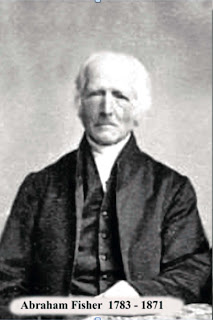
Anna Haslam and the Quakers of Piltown and Youghal

My god friend Mike Hackett who resides this side of Youghal Bridge is Youghl's foremost Historian. Mike has several books behind him And...