Saturday, January 28, 2012

Running For fun, by Paud Curran

My thanks to Paud, for this article.And, apoligies for hounding him to contribute to the Blog. Anyone out there who have anything to contribute, please get in touch. Photos, articles etc will be very welcome.
Please note, photos are from private collection and (c)
Eddie

Tom Cheasty
Sometime during the winter of 1961 John Harty encouraged me to travel to Dunhill in his car to participate in the county juvenile (under-16) cross-country championship. I remember that we collected another young lad in Ballinroad (possibly Tony McCarthy?), who as far as I can recall won the juvenile title that day. For my part, I had little or no experience of competitive running and I don't think that I even finished the race.  What does stick in my memory is that the senior title was won by that great Dunhill all-rounder, Mick White, while the junior race victor was Tom Cheasty, who just shaded it over John Harty.
Tom, in his hey-day, was notably broad-shouldered, with a build that certainly did not fit the profile for distance running - but he was, in all probability, using cross-country as part of his physical conditioning for hurling.


Paud at the finish of the Boston City marathon in 1986 with the lads from South Hill limerick

 
In 1962-63 I attended Pallaskenry Agricultural College in Limerick, where one had a chance to sample all kinds of athletic endeavour. While I could hold my own at football (having won a county junior championship with An Rinn that year), insofar as running was concerned it became clear to me that I did not have the natural speed for the shorter races and was probably the wrong build for the serious distance stuff. However, within these limitations I was to derive huge enjoyment from running for fun, mainly on the road, until I was well into my fifties.
Pallaskenry Agricultural College


Rideau Canal 
While I always had an interest in running throughout the sixties football was my main sport at that time. It was only when I lived in Ottawa, Canada between 1976 and 1980 that I really began to devote the time to it. Ottawa has the wonderful Rideau Canal flowing through its centre and, while it turns into a large skating rink in winter, it had a tarred pathway for pedestrians and cyclists along its banks, which went on for many miles. I worked downtown and we lived in a suburb five or six miles away and it was ideal to be able to run home after work (much of the jog taking me along the scenic banks of the Rideau Canal). In addition, Ottawa hosted an international indoor track meet and it was fantastic to see the great Eamonn Coghlan compete in a 5000 metres race on one occasion.

 The city also hosted an annual marathon race, and while I did not participate in this or indeed any other organised race at the time, it was clear that I had a growing interest in doing so.

The other interesting development at that time was the emergence of the highly designed and engineered running shoe. Adidas, I believe, led the way and the era saw a growing linkage between fashion and sportswear, which continues to evolve. It was a long way from the cheap, flat-soled, canvas running footwear that we wore in our youth!
I was friendly with a fellow from Co. Clare called Seán Egan, who was an 
The late, Seán Egan
academic at the
University of Ottawa. We played together on the Ottawa Gaels football team (in 1977, I added a Canadian junior title to my Waterford one!).
 Seán was a super-fit individual who could decide to run a marathon on a whim. In April 2005 the same man tragically lost his life on the slopes of Mount Everest while attempting, at 63 years, to be the oldest Canadian to summit that mighty mountain.

At home in An Rinn great things were happening on the athletic front. The marvelous exploits of St. Nicholas A.C., mentored by Fr. Michael Enright with the assistance of others such as John Harty and Paddy Joe Curran, had become a national story. I was away from it all but my brother, Kevin, and sister, Līse, were very much involved with the club. However, it was the emergence of John Treacy as an iconic figure for club, country and country that made that era a truly golden one.
Paud Curran admires Seán Treacy's Olympic medal 1984 Boston, right is Brendan Rogers
 When I returned from Ottawa and was living in Dublin I found that the Dublin City Marathon had become a hugely popular event and that there was a noticeable presence of runners on the city streets. I eventually trained enough to just about complete the race in 1981, and again (with an improved time) in 1982. I managed to raise some funds for ALONE on both occasions and met its founder – a very committed and modest man called Willie Bermingham. It was also great to participate in the marathon with old friends from An Rinn such as Seamus Drummy and my brother-in-law, Johnny Young.
Paud and John Young In Dublin

In 1983 we moved to Boston, the home of arguably the world's most famous marathon. As a race with a history dating back to 1897 I was nervous of even attempting to enter during our first year in the city. I did, however, train for an autumn marathon called BOSTONFEST, which I managed to complete in under three hours and thirty minutes (a visitor from home, Eamonn Terry, ran a magnificent 2.45 that day). The Boston Marathon proper is always held on Patriots' Day, which falls on the third Monday in April.
Boston City marathon. Left Paud Curran, to the fore, Mayor of Boston, Ray Flynn and to his right, Eddie Burke.1985
The obvious difficulty for anyone living in the Boston area is that the preliminary training for it has to be undertaken in severe winter conditions. My place of work was in Copley Square, which is the finish point for the marathon but which is also just a short distance from the Charles River. Not unlike the Rideau Canal there was a running pathway along both sides of the river which went on for about 20 miles in total distance and which was cleared of snow in winter. With the proper gear to combat the low temperatures this was an ideal training locale  for the April marathon. As one moved to within a month of the race date, in order to have a good chance of completing the 26.22 miles (42.195 km) course in a reasonable time, a week of peak training along the Charles River would involve five consecutive ten mile runs followed by a rest day and a twenty mile run on day seven. A fair commitment indeed for a “fun” runner!
A winter day
I completed four “Bostons” between 1984 and 1987. I managed to obtain an honorary official race number each year without having to achieve a qualifying time which I didn't have a hope of reaching (my fastest time over the four years was 3:31.38). In any event, I now have four coveted medals as souvenirs. Medals apart, I met some interesting people and made some great friends in these years’
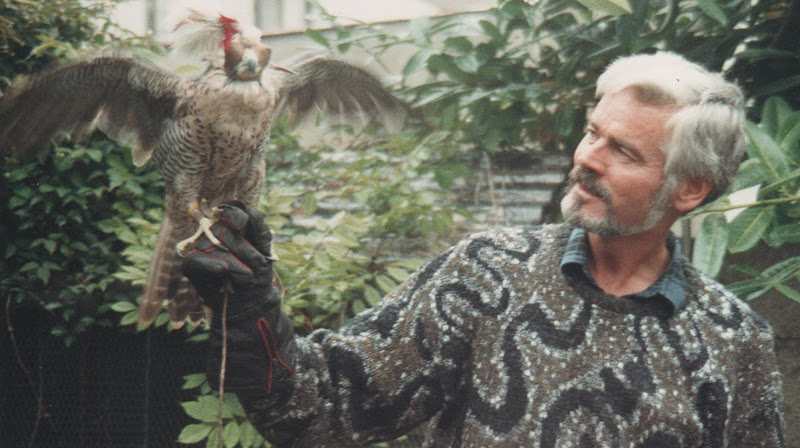
The late Pat O'Connell
 Pat O'Connell from Killarney was a regular participant in the marathon  - to raise funds to fight the disease that eventually took his life ; Fr. Joe Young and a group of young lads from the troubled Southill area of Limerick were involved on another occasion. John Treacy also raced one of the years, but a highlight of our time in Boston was to meet and be photographed with John when he returned from Los Angeles in 1984 with his Olympic silver medal.


Kick off at Heartbreak Hill
Ellison Tarazan Brown
I often say to people that I would gladly have sacrificed a toe just to have participated once in such an historic sporting event, not to mind four times! This, after all, is a race in which about 20,000 registered runners participate (and many more without official numbers), with as many as 500,000 spectators along the course. It was won only once by an Irishman – Niall Cusack from Limerick in 1974. What a thrill it was to run up “Heartbreak Hill”, around 20 miles into the race, which takes its name from a famous incident in 1936 when the previous year's winner, John A. Kelley, caught the then fading race leader, Ellison “Tarzan” Brown, giving Brown a conciliatory pat on the back as he passed. His competitive drive apparently stoked by this gesture “Tarzan” Brown rallied, pulled away from Kelley, and went on to win – in the words of a reporter that day “breaking Kelley's   heart “. Such is the depth of sporting history associated with the Boston Marathon...

Back in Dublin again, I continued to run for fun and fitness, without having any great enthusiasm for getting involved in organised races. Whenever we came to An Rinn I would regularly jog the length of the Cunnigar, which to me is the most scenic place to run available anywhere.
In 1990 we moved to Africa and experienced very different running conditions in countries such as Lesotho and Uganda. 
Left to roght; Jack Fives,RIP. Patrick Curran, Fr. Denis O'Callaghan(Waterford) RIP and John O'Neil, RIP  Pictured in Maseru

Paud, chats after the Campala race.
Famous waterford Hurler, Johnny O'Connor from Abbeyside, shares the Dungarvan leader with some Ugandans
The former lies at a very high altitude and is very hilly and mountainous. Running there, even at a testing 2000 metres high, was enjoyable because of the scenery and the sunshine. Moving to Uganda in 1994 I got involved with the Hash House Harriers in Kampala, for the first time. A word of explanation is probably in order here ; the Harriers originated in 1938 in Malaysia when bored British colonial civil servants invented this “fox and hounds” running game, which combines exercise and fun (mainly having to do with drinking beer!).

In any event HHH clubs have spread to virtually every country (having lost the colonial trappings along the way) and the weekly “race” is a great opportunity to meet other people, especially for newcomers in a strange city. I participated in well over a 100 such HHH gatherings in Uganda or while visiting other African countries.
Paud ,On board Naval ship in newport Rhode Island with Charlie Lawn and John Treacy


In 1997 I was home on leave and entered our local Rás na Rinne for the first and only time.
Rás na Rinne with seamus Manahan, left, and right Eamonn Terry(c) Rory Wyley


 The race goes from Coláiste na Rinne to the tip of the Cunnigar and back. While I was on the wrong side of 50 by then at least I had plenty of experience of the Cunnigar behind me and I had also been running at altitude in Kampala. 
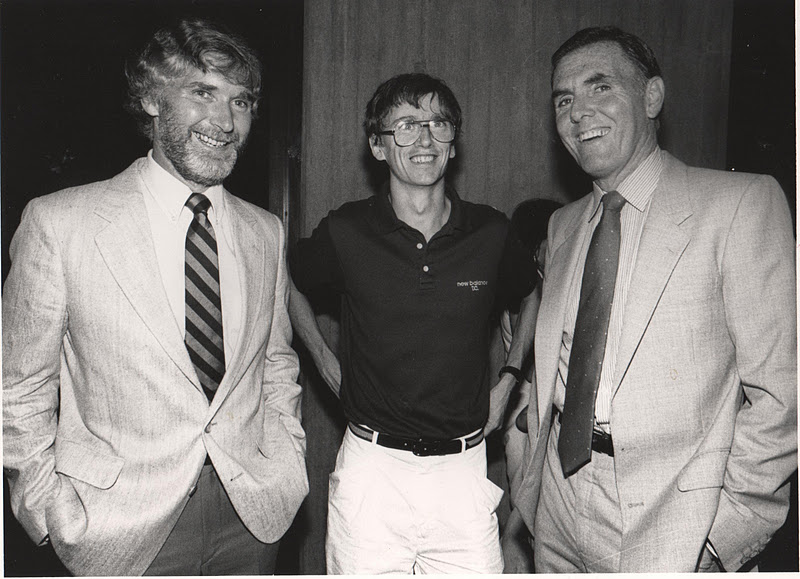
In Boston with John Treacy and Mayor of Boston, Ray Flynn


It was nice to be involved again with Seamus Manahan, Eamonn Terry and my nephew, Shay Young – and Paddy Joe Curran (who sadly passed away recently) was there on the course encouraging every runner, as he had done for many years. We may have finished near the end of the field but it was a great way to more or less bring down the curtain on my involvement in any form of organised running.
Paud pictured with others of the 'Irish team' in Campala

Now permanently settled back in An Rinn after most of a lifetime away, who should I find still involved with encouraging young people in athletics through An Ghaeltacht A.C. but the same John Harty who introduced me to running all these years ago. What a dedicated sportsman...
Patrick (Paud) Henry Curran pictured with his sons and his wife's niece


As for myself, I have now discovered the joys of walking – and no better place for it!

Monday, December 19, 2011

The Erin's Hope saga at Helvick Head & Dungarvan


The story of the Erins Hope, can be found elswhere in the Blog, What I offer here are newspaper cutting from the period, which I hope you enjoy. I have added some illustrations to give the piece a little colour.
Enjoy.
Eddie


The correspondent, of the Irish Times, writing from Dungarvan on the 2nd says:— While the magistrates were occupied at the petty sessions here to-day, a coastguard from Helvick arrived m great haste and had a conversation immediately with Mr Redmond, the resident magistrate. Upon the request of the latter all the other magistrates retired to their room without delay for the purpose of consultation, and the court was adjourned. The extraordinary circumstance which led to this sudden proceeding was that, the coastguard brought an account that a strange vessel had been seen off the coast by some of his men. Her movements were watched for some time, and she was observed to press a hooker from this port into her service, and which landed between forty and fifty men on the Cunnigar, a tongue of land stretching a considerable distance across the bay. But even the hooker could not get near enough the land to save those on board her getting a wetting, and the men had to wade up to their necks in order to reach the shore. Communication of this intelligence was at once made to the police, and without delay all that were available were despatched to Helvick on cars. Four men were there arrested, and the saturated state of their clothing bore out a portion of the coastguard man's statement. 

When searched,some documents, the nature of which has not transpired, were found with them, and one had in his possession a revolver. The entire party of suspicious characters, after landing, dispersed in various directions, and at the time I write the police are busily engaged in the pursuit. An order, I am informed, has been ordered to the police from the country stations. There is a guard; of fully equipped soldiers are ready for immediate march on the ramparts. I am sorry to say that, though Dungarvan preserved itself from Fenianism throughout, and that there was not a single case of disloyalty in it, on this occasion there appeared to be a marked tendency in favour of the Fenians amongst the roughs, who hissed the police, and endeavoured in every way to obstruct them. In contrast with this serious matter there was an amusing episode in connection with the hurried withdrawal of the magistrates from court. A prisoner in the dock accused a crime prevalent in the country — namely, sheep plucking, taking advantage of the slight confusion which followed, and the absence of mind of those around him, made his escape.


FINIAN RIOT AT WATERFORD. (From a Correspondent of the Freeman's journal Thursday 15 August 1867  "It appears that four of the constabulary from Cork arrived here on Thursday evening, in charge of prisoners who were arrested at Helvick Head, near Dungarvan, and who were tolled off for temporary imprisonment at Waterford Gaol. Amongst them were two men who were identified by Corrydon as' General' Nagle, of the United States army, and Captain Warren, of the New York Volunteers. The appearance of this party in the dusk of the evening attracted a crowd, and the police feared without reason, I understand-that sympathisers would attempt a rescue. The strongest feature in the case is that the police in Waterford had no intimation of the transfer of the prisoners, and made no arrangements either to assist their brethren in arms or to conduct them through strange and winding streets to the gaol. 


The Cunnigar, I took this photo  from Ballymarket
The Cork police, marched to the police-station here for assistance, and while the constabulary, were being gathered in from various places, and very large crowds of men, women, and boys collected, forty policemen armed with rifles and bayonets, and six mounted men armed with sabres, were told off to escort the prisoners to gaol, a distance of about a quarter of a mile. This march was performed under certainly trying circumstances, A crowd, variously estimated at from a thousand to two thousand salters, fishermen, and idlers of all classes, cheered the prisoners, hissed their custodians, and indulged in the favourite Irish pastime of stone throwing. Some say the stones were abundant, and it would appear from various accounts that some of the police were hurt. The gaol was safely reached, and the prisoners having been given into the custody of the governor, the escort returned towards the barracks.


Dungarvan Castle
They proceeded down a narrow street, on one side of which is a grave yard, surrounded by walls ten feet high. Here they were assailed by unseen stone throwers, and the shops opposite this masked battery bear evidence of the affray in respect of a few broken windows. The police would not stand this treatment any longer, and without orders-nay, in defiance of Head-Constable Barry, who was in command-they turned, and with fixed bayonets, made an indiscriminate attack, not upon the stone throwers or alleged stone throwers, but upon the men, women, and children who crushed after them to see the sport. Denis Walsh received two thrusts of a sword or sword bayonet in the side and breast and died on the spot. He ran away from the police and attempted to get into the house of a publican named O'Neill, but a girl shut the door as he was within a step of being safe, and he instantly received the wounds which left him dead on the flagway opposite the inhospitable door. Jeremiah O'Sullivan was wounded in the hip. He is a very old man. Keenan, a blacksmith, was wounded in the back. He is in hospital and is doing well. A little boy was severely trampled upon by the horses; and a woman received a sword thrust through the arm. It is said that a great many people received wounds who are afraid to seek medical aid lest they should be arrested. The doors in the houses in Patrick Street are cut with bayonet trusts; and I saw a shutter composed of half-inch wood which was completely perforated with a sharp broad instrument. This thrust extended to the sash of the window."

This is a photo illustrating the sleeping quarters at Dungarvan castle during the period.
Thisis a further reeport
The affray at Waterford- A serious riot occurred at Waterford on the night of Thursday, June 13, which proved to be the most violent demonstration that has yet occurred in connection with the movements of Fenian prisoners. But in Waterford there were special causes of irritation predisposing the mob to violence. Much soreness of feeling remains as result of the encounters with the military at the late election, and there was great public excitement caused by the landing of so many Fenian leaders near Dungarvan. The sufferings they had endured from being tossed about so many weeks at sea, and then driven by starvation to fling themselves ashore at all hazards, created the liveliest interest in their fortunes, presenting them to the popular imagination as so many heroes of romance. 
The old market houseDungarvan,  where the fenian Edmond Power was hanged from out of the window!


The rumour that some of them were men of high social position in the United States and above all two of them were distinguished officers in the Irish brigade commanded by General Meagher raised the excitement to the highest pitch. Meagher is a native of Waterford, where his family are very influential, so that the feeling of clanship was added to all the other elements of combustion. Another inflammatory matter was the appearance of Corrydon, the informer, at Waterfowl, on Monday, Juno 10. For the purpose of identifying some of the American fugitives in the county gaol. It is said that his defiant bearing and cool assurance caused general indignation among the populace. It was under these circumstances that four of the men who had landed near Dungarvan were brought in by the train from Cork which arrived at quarter to 9, Thursday evening, conducted to the lock-up at Lady-lane, where they were detained for some .....,(difficult to read the writing, so have omitted some words).....  

Fenian Log
  Being mounted commanded by Head-constable Barry. During the time which elapsed between the arrival of the prisoners at Lady-lane and their removal the intelligence of their presence had been spread throughout the city, and large numbers of people had assembled in the Mayor's-walk and on the hill of Ballybricken, immediately outside the gaol, when the escort made its appearance. It was with difficulty that a way was made through the angry crowd. Stones were thrown at the police, and there seemed to be a determination to rescue the prisoners, some of whom were hit by the stones intended for the police. They were safely lodged in gaol; but the mob vented their fury on the police when they were returning. Brickbats, paving stones, &c, were thrown, cutting and wounding the men dreadfully; several of their firearms were broken. 

The boys in action


They were compelled to turn and charge the mob to save their lives. One man named Walsh, a salter, was stabbed in the breast and was killed; another named Keenan was severely stabbed, and his life is despaired of; about 20 others were wounded. A desperate fight lasting for some minutes ensued. The horse police eventually cleared the streets. The mob occupied an elevated ground, having beside them a magazine of large stones, which they threw at the constabulary. While this was going on a constable named Mercer happened to get separated from his party, and was seized upon by the mob and beaten. Efforts were made by the police to get him out of their hands peaceably, but without effect. One or two constables were severely injured in this attempt.


Fenian grave  monument at Glasnevin
Head constable Barry, who had charge of the party, ordered his men to rescue Mercer. Bayonets were fixed, and the men charged the mob. Those only who have witnessed popular commotions can form an idea of the scene which ensued, The police pressed on an infuriated crowd, struggling with them step by step, wounding some with their bayonets, and being wounded in return by stones thrown at them. The cavalry police, in endeavouring to rescue their comrade, also charged, and in doing severely injured several persons in the crowd, the police, however, acted with calmness and calibration, and appeared actuated throughout with a desire simply to perform their duty. 


Thomas F. Meagher
The constable Mercer was eventually rescued, but was found in a sad plight. His rifle was broken, his hat stolen, and himself wounded and bleeding. The constables retired to their barracks with the wounded man, and left the cavalry to clear and preserve order in the streets. Keenan, a resident in John’s-lane, expired on June 14. Twenty four persons had their wounds dressed besides 32 policemen. A great number of the civilians suffered from wounds inflicted by stones aimed at the police. Many of the police are seriously injured, and will not be able to resume duty for a considerable period. At 11 all was quite.

Sunday, December 11, 2011

Airgead Póca (2)


                                                               Airgead Póca (2)
 Story by' Padraig 'Paud'  O Cuirrin, photos (c) Eddie Cantwell .
 My thanks to Paud, for this follow up

As previously mentioned there was a significant gap in time between the sugar-beet thinning season and the harvesting of the crop, so other ways had to be found to earn some pocket-money to cover the school holiday period when it was most needed. Central to these fund-raising efforts would be the saving of the hay and the harvesting of cereal crops.

In Tipperary long ago they used to say “The hay is saved – and Cork is bet!” which aptly described the importance of hay in the farming cycle. There was - and still is - a huge dependency on the hay crop among farmers, small and large, to see the farm livestock through a long and often harsh winter.


When it came to hay–making the first obligation was to the home place and afterwards one might fit in some paid work with a neighbour such as Garrett Quinn, who had an extensive farm close by Before the widespread use of the baler, the process of saving the hay went through a number of labour-intensive stages – all meant to ensure that the hay ended up fully dry in a rick in the haggard or in a barn. The changeable nature of the Irish summer meant that the description of the hay being “saved” was indeed very appropriate!

Whether working at home or on hire to another farmer there was something pleasant about hay-making. It did not involve the hardship associated with the beet crop and the work was, out of necessity, carried on in fine summer weather. Also saving the hay had an element of the meitheal about it, as people often helped each other – and never did a cup of tea and a slice of currant cake taste better than when enjoyed lying against a cock of hay!


Most small farmers would have an acre of oats or barley – whether for animal feeding or selling on to a local grain merchant – and again some opportunities for earning pocket-money opened up in late summer, when the harvesting took place. By the time I was old enough to do serious farm work the combine harvester had largely taken over from the reaper and binder and the threshing machine, and the job had become more about lifting bags of grain and gathering up straw. That one piece of modern machinery fundamentally changed the face of rural Ireland as the concept of the meitheal or people working together for a common purpose, such as at a threshing, largely came to an end.


A source of some scarce spare cash for some of us in An Rinn was winkle picking. Periwinkles were to be found in abundance to the east and west of Cē Bhaile na nGall and in a few other places such as Poll a' Phūca. The demand for winkles seemed to have come from the Continent as it is only very rarely that I saw them being eaten locally. Winkle picking was not easy work as it involved being stooped over for as long as the tide allowed you to be on the rocks, and weather conditions were often harsh. The problem for us “suppliers” is that there were very few buyers and more often than not you were faced with a monopoly situation. The going rate was around a half-crown a bucket but sometimes the bucket produced by the buyer was well in excess of the standard measure – and the winkles would be piled so high that they were falling off the sides! Even if you protested and held back from selling you ran the risk of the winkles dying off before another buyer appeared. On the whole, picking winkles was neither attractive nor very profitable and it was something that we did when there was little else available.


The most lucrative part-time job I had was for a summer in the early 1960s. The Land Commission decided to bring some order to bear on the many bits and pieces of land, broadly around Baile na nGall  ; where the boundaries of such small holdings were largely undefined and where ownership was sometimes disputed. The job entailed a lot of fencing and I was employed as part of a work-gang of about six men tasked with erecting concrete fence-posts and wire. As material had to be moved around the various sites our farm horse and cart was needed and there was extra payment given for this service. Mickey Dalton, who is still to the good as a well-known traditional musician, was the site foreman and the late Eddie Curran (Glenbeg) was responsible for paying us on behalf of the Land Commission. An engineer from Dungarvan occasionally inspected the work. Some of the fencing that was erected is still in place fifty years later and was probably helpful to people over the years, especially during our recent building frenzy when sites in An Rinn were hugely valued? In any event, I was well paid by the standards of the time (when the premium for the horse and cart was tallied) – even if most of what I got had to be surrendered at home!  


In due course, we moved on to more serious and permanent ways of earning a living. Much is made nowadays of “work experience” or the lack of it. I like to think that all of these little jobs that we did in our youth amounted to relevant “work experience” - if perhaps not for inclusion on any formal CV but, in a more general sense, as preparation for life.

Wednesday, November 23, 2011

Airgead Poca


 Story by' Padraig 'Paud'  O Cuirrin, photos (c) Eddie Cantwell and others.
Nioclás Ó Griofáin(left) chats with Paud.

                         Airgead Poca
 By, Padraig O Cuirrin
Few people nowadays, and more especially the younger generation, can appreciate how difficult it was to get one's hand on a bit of pocket money in the '50s and '60s. Some would argue that it was hard to acquire cash at all – pocket money or otherwise – at that time!


Growing up in a rural area like An Rinn meant that the agricultural sector offered the best prospects for earning a few bob. Farming then was largely non-mechanised and thus was extremely labour-intensive – and none more so than the cultivation of the sugar-beet crop. As it was a guaranteed cash crop many small farmers locally might have an acre of beet and for some, like Eddie Crotty, it was their main tillage crop.

Labour-intensive it certainly was and, in an Ireland stripped of manpower due to emigration, part-time work opportunities opened up for school-boys like myself at various stages of the sugar-beet cropping cycle. In early summer the newly emerged beet plants had to be thinned (and weeded), while in the late autumn the harvesting process got underway.

This wonderful photo is of Tomás MacEoin (Tom Keohan) An Rinn--1901-1983
His Grandmother was Mary Regan, --and Great Grandaunt to Seán Reagan USA, who gave me the photo. Seán tells me that he oft times carried a bucket of water on his head!  (Eddie)
tion


Perhaps we did not reflect too deeply on it at the time but thinning beet was hard and monotonous work. It meant being on one's knees from early morning, straddling the beet drills with sacking tied around the knees for protection. If the weather was too dry the hands would be torn off you trying to pull out the surplus plants and the weeds which sprung up with the beet ; when it rained the pulling and dragging was easier but then one had the discomfort of crawling through mud - with perhaps a good soaking added in for good measure! There wasn't much scope for negotiating on pay and the going rate was usually a shilling a drill. How much one earned depended on factors such as the length of the drills, and whether the farmer had “scuffled” the furrows between the drills (which reduced the amount of weed to be dealt with). Overall, the minimum expectation was around ten drills thinned for ten shillings a day, with the possibility of earning up to a pound under optimum conditions.
Early view of Ballinagoul, Ring


While the money was indeed hard-earned it did enable one to make a contribution to the hard-pressed family budget and still have some discretionary funds available to pay for a trip to the cinema or maybe even buy an item of clothing. The downside, of course, is that the thinning season was of short duration and other work had to be found.

Around October the matured sugar-beet was ready for harvesting. This involved a number of men or Ringboys each walking between two drills, pulling a beet plant with each hand and banging them together to remove the excess clay from the roots. Once the beet was all pulled the process of “crowning” began. A special machete-like cleaver was used for this. The beet had to be cleaned of all leaves and thrown in a pile for transporting. A horse and cart would be used to draw the beet from the field to the nearest road where it was heaped until a lorry arrived to take it to the train station in Dungarvan for conveying to Thurles or Mallow beet factories to be processed into sugar. Richie Walsh was usually the haulier who undertook this locally. Getting the beet off the road and into the lorry was tough work indeed. Like the cleaver used for “crowning” a special sprong with balls of metal on the tip of each prong to avoid sticking the beet was developed for this loading work. I well remember cycling over to Eddie Crotty's after school or on Saturdays to participate in this seemingly never-ending work of getting the beet on its way to the factory. Given the time of year it was inevitably undertaken in cold and wet conditions.
Group from Ring on a trip to Youghal (Waterford County Museum)


For all of the hard work involved with beet one would not wish to give the impression that it was unrelenting misery. The process usually involved a number of people at all stages and there was room for some fun and a sense of camaraderie developed – and even a bit of competition sometimes as to who would get the most drills thinned! I suppose our expectations were low and we were just happy to have the opportunity to earn anything at the time.
 Seán & Barbabra Regan pictured with Paud...a few weeks ago!!!

I don't think that anyone made a fortune from sugar-beet production, mainly because of all the labour and other inputs required, but it did provide a modest cheque for many small farmers in the run up to Christmas. For some more of us it put a few shillings in our pockets at a time when money was a scarce commodity indeed. 

Sunday, October 2, 2011

Mike Hackett passed on these photos to me:
 Mike is dressed  in the brown!

Cork City Hall where Cliff Winsor, his sister Margaret and I, had a stand at the exibition of books and history pieces from the villages and towns of County Cork.  The Youghal stand was one of fifty and I was surprised at the small places like Kilmurray and Aubane that were represented.  Just goes to show  --  all you want is about three interested people to achieve a lot.
 three snaps of the Youghal stand and you can get the vibes from it re the fun that we had.
  Take care and best wishes from Youghal.

Anna Haslam and the Quakers of Piltown and Youghal

My god friend Mike Hackett who resides this side of Youghal Bridge is Youghl's foremost Historian. Mike has several books behind him And...